

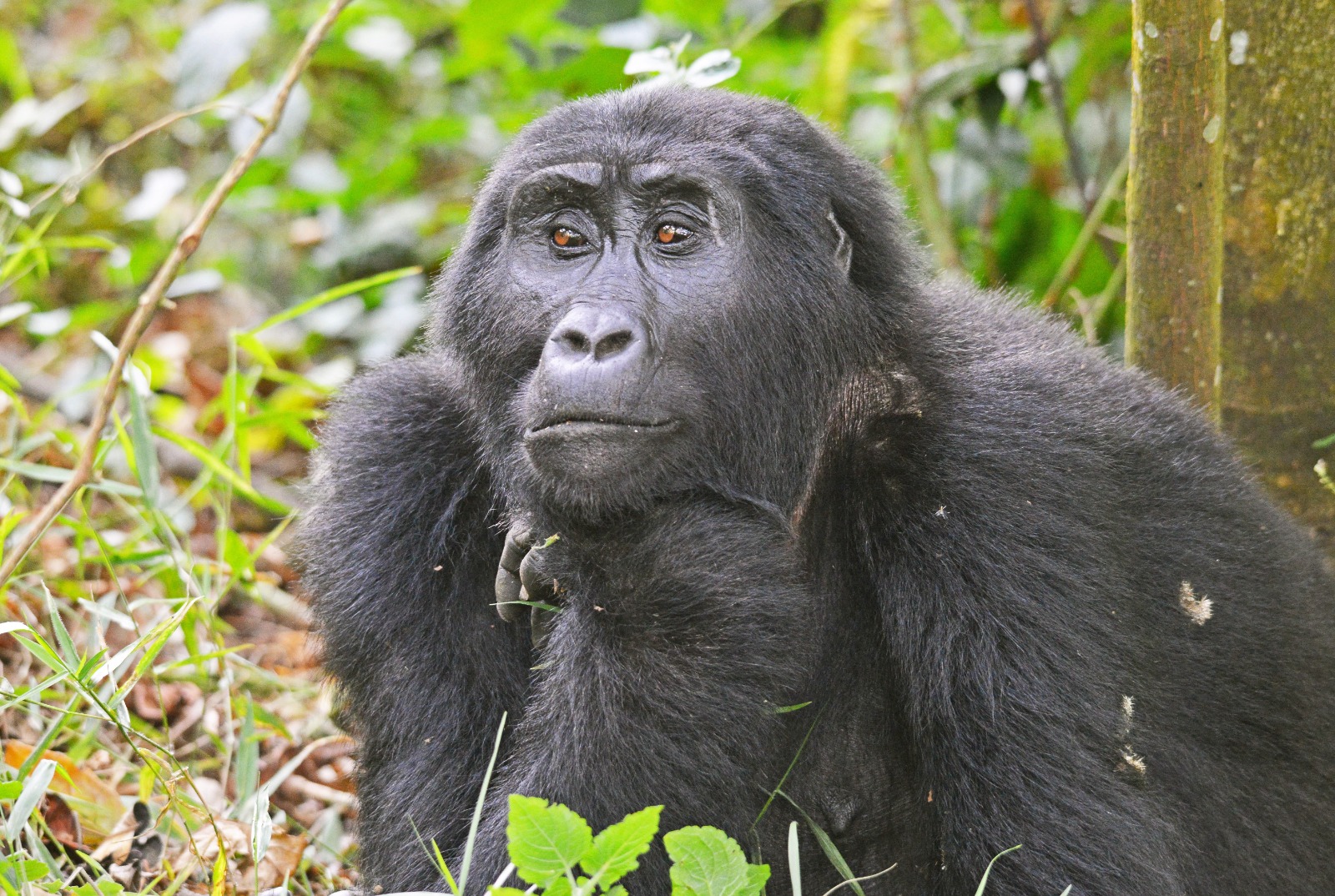
Gorilla Trekking Safari in Uganda: An Unforgettable Wildlife Adventure
Imagine walking through a misty tropical rainforest, surrounded by ancient trees, birdsong, and the sounds of the forest. After hours of hiking, your guide suddenly signals you to stop. Just a few metres away, a family of mountain gorillas is resting among the vegetation. One of the world’s most remarkable wildlife experiences is unfolding right in front of you.
This is the magic of a gorilla trekking safari in Uganda.
Uganda is one of the world’s premier destinations for mountain gorilla trekking, with the experience taking place in Bwindi Impenetrable National Park and Mgahinga Gorilla National Park in southwestern Uganda. Uganda Wildlife Authority confirms that these are the country’s designated mountain-gorilla tracking areas.
Why Choose a Gorilla Trekking Safari in Uganda?
A gorilla safari is very different from a traditional game drive. Instead of searching for wildlife from a vehicle, you explore the forest on foot with experienced guides and rangers.
Uganda is especially attractive because a gorilla trekking adventure can be combined with other safari experiences. Travelers can visit destinations such as Queen Elizabeth National Park for game drives and boat cruises, Kibale Forest for chimpanzee trekking, or Murchison Falls for spectacular landscapes and wildlife.
The result can be a diverse Uganda safari combining primates, big game, forests, mountains, lakes, and local culture.
Bwindi Impenetrable National Park
Bwindi is perhaps Uganda’s most famous gorilla trekking destination. The UNESCO-listed forest is a spectacular landscape of thick vegetation, steep hills, and mist-covered slopes.
Gorilla trekking takes place through several sectors of Bwindi, including Buhoma, Ruhija, Rushaga, and Nkuringo. The particular sector you visit depends on your permit and the trekking arrangements for your safari.
The trek itself can be challenging. You may walk for several hours through steep and sometimes muddy terrain before reaching the gorilla family. However, the difficulty makes the final encounter even more rewarding.
Mgahinga Gorilla National Park
Mgahinga Gorilla National Park is another excellent destination for a gorilla trekking safari. Located within the Virunga mountain range, the park combines mountain scenery with dense forest habitat.
The experience here offers the chance to encounter mountain gorillas while enjoying spectacular views of volcanic peaks. Uganda Wildlife Authority notes that gorilla tracking at Mgahinga starts from the Ntebeko Visitor Centre and can typically last several hours.
Mgahinga can also be attractive to travelers interested in hiking and other forest experiences.
What Is Gorilla Trekking Like?
Your trekking day normally starts early with a briefing from the park authorities and your guides. Trekkers are then divided into groups and enter the forest in search of a habituated gorilla family.
The trek may take a relatively short time or several hours, depending on where the gorillas are located that day.
When the gorillas are found, you will have a regulated period to observe them. You might see a silverback watching over the family, mothers caring for young ones, juveniles playing, or gorillas feeding among the vegetation.
It is an emotional and unforgettable encounter because you are observing these magnificent animals in their natural habitat rather than in a zoo or enclosure.
Gorilla Trekking Permits and Costs
A gorilla trekking permit is required to participate in the activity. Uganda Wildlife Authority’s published 2024–2026 tariff lists the standard gorilla tracking permit at US$800 for foreign non-residents, US$700 for foreign residents, and UGX 300,000 for East African citizens.
Because permit prices and tourism regulations can change, travelers should confirm the current tariff with Uganda Wildlife Authority before making a booking. UWA is the authority responsible for managing Uganda’s national parks and wildlife activities.
Best Time for a Gorilla Safari in Uganda
Gorilla trekking is possible throughout the year. However, many travelers prefer the relatively drier periods because forest trails are generally easier to navigate.
The commonly preferred periods are June to August and December to February. During wetter months, the forest can become muddy and slippery, although the rainy season can provide greener scenery and fewer visitors.
If you are flexible with your travel dates, your tour operator can help you choose a period that matches your budget, preferred weather, and availability.
What to Pack for Gorilla Trekking
Preparation can make your trekking experience much more comfortable. Important items include:
- Sturdy hiking boots
- Long trousers and long-sleeved clothing
- Waterproof jacket or poncho
- Gardening or hiking gloves
- Insect repellent
- Hat and sunscreen
- Reusable water bottle
- Small backpack
- Camera and spare batteries
- Walking stick or trekking poles if needed
Because the terrain can be steep and slippery, comfortable footwear is particularly important.
Gorilla Trekking and Conservation
Gorilla tourism plays an important role in conservation. Visitors’ activities contribute to the management of protected areas and help create economic opportunities connected to wildlife tourism.
Uganda Wildlife Authority also emphasizes sustainable wildlife management and community participation in conservation.
During your trek, it is essential to follow the instructions of your ranger and guide. Avoid making unnecessary noise, do not attempt to touch the gorillas, and follow all health and safety requirements.
Responsible tourism helps ensure that future generations can continue to experience these extraordinary animals.
Combining Gorilla Trekking With a Uganda Safari
A gorilla trek can be the highlight of a longer Uganda safari.
A typical itinerary might combine:
Kampala or Entebbe → Queen Elizabeth National Park → Bwindi Impenetrable National Park → Gorilla Trekking → Lake Bunyonyi → Return to Kampala or Entebbe
For travelers with more time, the safari can be extended to include Kibale Forest for chimpanzee trekking, Murchison Falls National Park, Kidepo Valley National Park, or the Rwenzori Mountains.
This combination allows visitors to experience much more than gorillas. Uganda’s diverse landscapes and wildlife make it possible to create a safari that combines adventure, relaxation, wildlife viewing, and cultural experiences.
Final Thoughts
A gorilla trekking safari in Uganda is more than simply seeing wildlife. It is an adventure into one of Africa’s most beautiful forests and an opportunity to spend time observing one of the world’s most fascinating primates in its natural environment.
From the dramatic hills of Bwindi to the volcanic landscapes of Mgahinga, Uganda offers an unforgettable setting for this once-in-a-lifetime experience.
If you are planning an African safari and want an experience that combines adventure, wildlife, nature, and conservation, gorilla trekking in Uganda deserves a place at the top of your travel list.
For official visitor information and current park regulations, consult Uganda Wildlife Authority and Uganda Tourism Board.